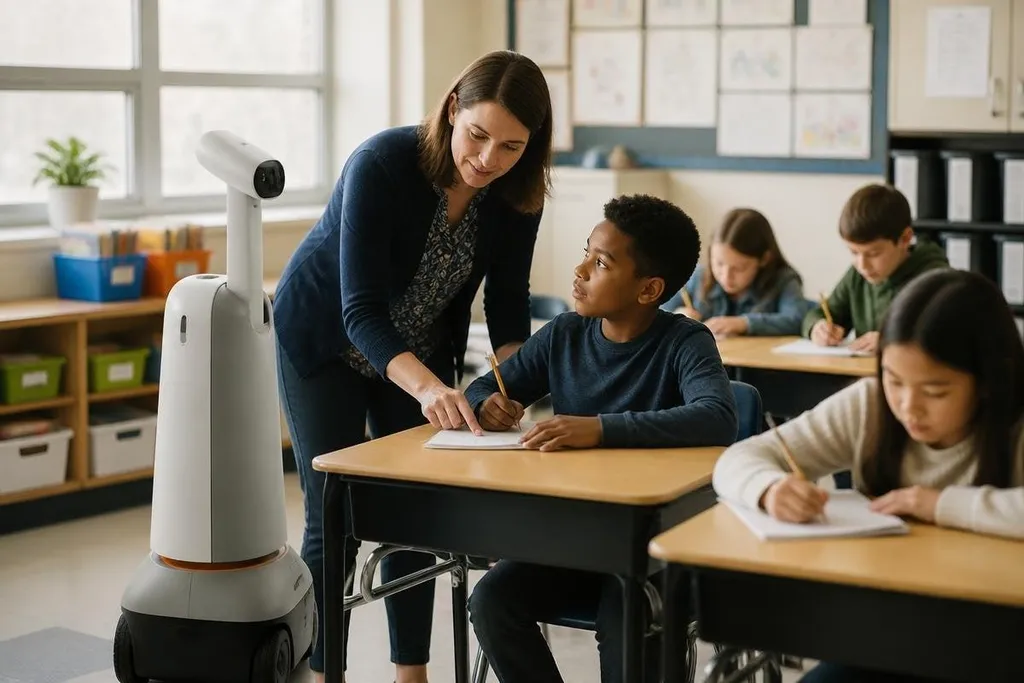
A classroom robot may read a prompt aloud, guide a practice task, or move through a room while students work. The teacher still sets the goal, checks the result, and decides what happens when a student needs more than a standard reply.
Quick read
- Robots can handle repeatable classroom tasks, such as reminders and guided practice.
- Teachers should keep control of assessment, discipline, safeguarding, and personal data.
- A useful trial starts with one narrow task and a clear way to measure its effect.
Give the robot a narrow job
The safest starting point is a task with a clear input and output. A robot might ask a set of spelling questions, read instructions aloud, or carry learning materials between work areas. These jobs have visible limits, so the teacher can check what happened.
That boundary matters because a robot follows its software and its available data. It doesn't understand a student in the same way a teacher does. If a child stops answering, repeats the same error, or looks upset, the teacher needs to decide whether the problem is the lesson, the device, or something outside the task.
A robot can also act as a practice partner. It may wait for an answer, repeat a prompt, or change the next question when the software detects a wrong response. Those actions can give a student more turns without asking the teacher to repeat the same instruction across the room.
Keep teaching decisions with the teacher
Teaching includes choices that don't fit a fixed script. A teacher weighs a student's work, mood, language, past progress, and home situation before deciding what help to give. A robot may record an answer or flag a missed step, but the teacher should make the judgment that follows.
That rule applies to marks and reports. Robot-generated scores can help sort work for a first review, yet a teacher should check the scoring method before using it in a grade. The class needs to know what the system records, how long it keeps the data, and who can see it.
Safety needs the same clear line. A mobile robot should have a marked operating area, a way to stop its motors, and an adult who can take control. A classroom trial also needs a plan for blocked paths, damaged equipment, and students who don't want to interact with the machine.
Use the robot to make more time for people
The point of a classroom robot is easy to miss if the teacher spends the lesson fixing it. Setup, charging, software updates, and fault checks all take time. A school should count those tasks before it claims that a robot gives teachers more time.
During the trial, the teacher’s lost minutes should show up in the results. Can they lead a longer small-group discussion, and do students get more practice turns? If the robot cuts repeated instructions but adds work after class, the school has moved labor rather than saved it. Classroom robotics reporting from Robot24.com can tie those claims to named machines, test sites, and safety records. Those results should decide whether the robot stays in the classroom.
Teachers also need a clear way to stop using the robot. If students learn less, avoid the task, or spend more time waiting for the system, the trial has already supplied its answer.
What remains unproven
A robot working through a prepared lesson is not proof that it can handle a full school day. The open questions include speech recognition in a noisy room, access for students with different movement or communication needs, and the effect of faults on lesson time.
Schools should ask vendors for records from the exact model under review. A smooth video does not show how often the robot fails, how staff fix it, or what happens when a student gives an answer the software doesn't expect. Those details belong in the trial plan, not in a sales meeting after the purchase.
I'd keep robots in a helper role until a school has measured the extra work and checked the data rules. That leaves teachers free to use the machine where it helps, while keeping care and judgment with people.
A practical school checklist
Before starting a classroom trial, check these points:
- Choose one task: Write down the lesson step the robot will handle and the teacher's role beside it.
- Set a stop rule: Decide which result, fault, or safety issue ends the trial.
- Check the records: List every student detail the robot stores, where it goes, and when it is deleted.
- Plan for access: Test the task with the students who will use it, including those who need another way to speak, move, or respond.
- Count staff time: Record setup, supervision, charging, cleaning, and fault checks across the trial.
The next useful question is specific: after four weeks, did the robot give the teacher more time with students, or did it create another task to manage?